
If you are decorating a room in 2026, there is a very high chance that the size you will end up searching for is an 8×10 rug. Designers and retailers repeatedly call this size the “sweet spot” because it is big enough to anchor a full furniture group but still compact enough to work in average homes and apartments. An 8×10 covers roughly 96 by 120 inches of floor, which is just the right amount of space for most living rooms, many bedrooms, and a large number of dining setups. When chosen wisely, a single 8×10 rug can transform how a room feels, sounds, and functions, making it look more polished, more comfortable, and more expensive all at once.
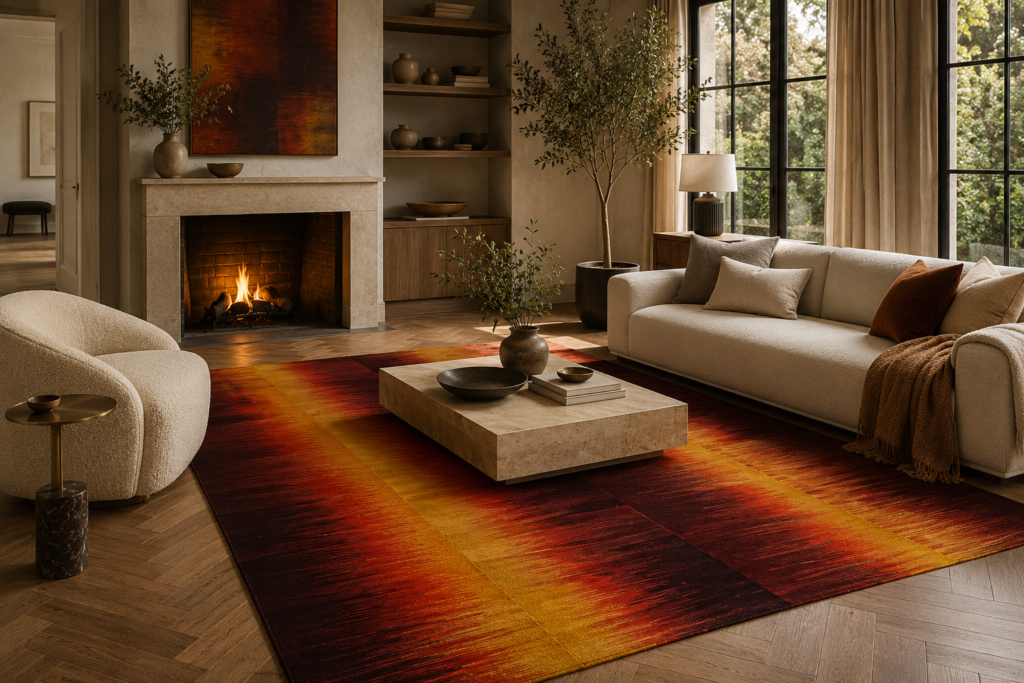
This long‑form guide has been written to work like a blueprint for your rug decisions. It walks you through size planning, layout formulas for every major room, price ranges, material choices, style trends for 2026, colour strategies, and practical care tips that keep an 8×10 rug looking new. You can use it whether you are buying your very first statement rug or upgrading from a smaller piece that never quite fit the room.
Why 8×10 Rugs Dominate Modern Homes
The 8×10 rug has become the most popular area rug size in many markets because it fits more real‑world rooms than any other single size. It is often described as a “Goldilocks” option: not so large that it swallows a standard living room, not so small that it looks like a bathmat under a sofa. In typical layouts, it allows furniture legs to overlap the rug while still leaving a border of exposed floor around the edges, which visually enlarges the space instead of shrinking it.
Compared with smaller 5×8 or 6×9 rugs, an 8×10 has enough footprint to act as the main foundation of a room. It can hold a sofa, coffee table, and chairs together as a single composition; it can sit under a queen or king bed with generous soft landing space; and it can often fit a six‑seat dining table with chairs fully on the rug. Because of this versatility, buyers who are unsure where to start are frequently advised to begin their search with 8×10 and move up or down only if specific room measurements demand it.
Understanding The 8×10 Rug Size
Exact Dimensions
Although we call it an 8×10 rug, the actual dimensions can vary slightly from brand to brand. Many manufacturers list sizes such as 7’10” x 10’2″ or 8′ x 11′, so it is important to check the detailed product description instead of assuming a perfect 96 by 120 inches. Retailers sometimes group 8×10 and 8×11 under the same size category because both behave similarly in most rooms.
If you prefer precise measurements, thinking in inches helps. A standard 8×10 rug is usually listed around 96 inches by 120 inches, while a closely related 8×11 is more like 96 by 132 inches. From a usage perspective, both sizes give you enough area to place large furniture pieces on the rug while still keeping a visible border of flooring as a frame.
Ideal Room Sizes For 8×10
Guides that compare room sizes and rug sizes generally suggest that 10×12, 12×14, and even 14×16‑foot rooms are strong candidates for an 8×10 rug. In these spaces, it is common to leave around 12–18 inches of flooring showing between the rug edge and the wall, which stops the room from feeling like it has wall‑to‑wall carpet while still delivering a generous feeling of coverage.
In larger open‑plan rooms, a single 8×10 rug can be used to define a seating zone or reading corner while other zones are left bare or given their own rugs. In smaller rooms, the same size can be allowed to run closer to the walls, which actually makes the room feel bigger by reducing the number of visual breaks in the flooring.
8×10 Rugs In Living Rooms: Layout Formulas That Work
The Front‑Legs‑On Rule
When designers talk about living‑room rug size, one rule comes up again and again: at least the front legs of sofas and chairs should sit on the rug. For most standard sofas that measure between 84 and 96 inches long, an 8‑foot‑wide rug allows those front legs to rest comfortably on the rug while leaving a small margin on either side.
In this “front‑legs‑on” layout, the coffee table typically sits fully on the rug, and side chairs or accent chairs place at least their front legs on it as well. This keeps the seating area visually connected and makes the rug feel like a deliberate foundation rather than a small mat floating in the middle of the floor.
All‑Furniture‑On For Larger Rooms
If your living room is big enough and the furniture group is reasonably compact, you can place all the main pieces—sofa, chairs, and sometimes side tables—fully on the 8×10 rug. This arrangement feels very polished and is often used in magazine‑style interiors. It works particularly well when you still have a margin of exposed flooring around the outside of the rug, even with everything on top.
However, if the room is extremely large or the furniture pieces are widely spaced, a 9×12 rug may provide a better sense of proportion. In such cases, the 8×10 can be repurposed for a secondary zone such as an office corner or bedroom.
Floating Sofa In Open‑Plan Spaces
Open‑plan living rooms where the sofa floats in the middle of the space rather than against a wall can be tricky to define. Here, 8×10 rugs shine because they work as self‑contained “islands.” Position the rug so that the sofa, coffee table, and chairs all lie on top of it, and let the rug’s boundaries mark where the living area begins and ends. Traffic paths can then flow around the outside edges of the rug without cutting confusingly through the middle.
8×10 Rugs In Bedrooms: Waking Up On A Soft Landing
Under A Queen Bed
Bedroom size charts repeatedly highlight that the 8×10 rug is almost ideal under a queen bed. The most popular placement slides the rug under the bed so that it starts a few inches in front of the bedside tables and extends past the foot of the bed. This layout typically leaves around 18–24 inches of rug showing on each side, which gives you a comfortable soft landing when you get out of bed.
This arrangement also frames the bed visually. Instead of the bed appearing to float on bare flooring, it becomes the centrepiece of a defined zone, which adds a boutique‑hotel feeling to even a modest bedroom.
Under A King Bed
Designers often state that a 9×12 rug is the best match for a king bed, but many real‑world bedrooms are not large enough to handle that size easily. As a practical compromise, an 8×10 rug can still work under a king bed, especially if you slide it down so that more of the rug extends beyond the foot of the bed instead of under the headboard.
You may not get quite as much exposure at the sides, but there will still be a soft strip to step onto in the morning. This option is especially helpful in apartments and secondary bedrooms where square footage is limited.
Guest Rooms And Multi‑Use Spaces
In guest rooms, an 8×10 rug instantly upgrades the experience by making the room feel more generous and welcoming, regardless of whether you have a queen or double bed. In multi‑use rooms where the bed shares space with a desk or reading chair, an 8×10 can be positioned to sit partially under the bed and partially under the secondary zone, unifying the whole layout without needing multiple smaller rugs.
8×10 Rugs In Dining Rooms: Avoiding Chair Traps
Matching Rug Size To Table Size
One of the most important principles for dining rugs is that chairs should remain on the rug whether they are pushed in or pulled back. To achieve this, size charts often advise adding about 24 inches to each side of your dining table dimensions and choosing the closest rug size.
For many rectangular six‑seat tables, this calculation points directly to an 8×10 rug. It provides enough room for all chairs to slide back without catching on the rug’s edge and gives the dining zone a strong visual base.
Best Materials For Dining Areas
Dining rooms are exposed to crumbs, spills, and occasional accidents, so material selection is critical. Many experts recommend flatwoven or low‑pile rugs in synthetic fibres or tightly woven wool for these spaces because they are easier to vacuum and spot‑clean than deep, shaggy piles. Washable 8×10 rugs made from polyester or similar fibres are also gaining popularity with families because they can be machine‑washed according to the manufacturer’s instructions.
Materials For 8×10 Rugs: How To Choose What’s Underfoot
Wool
Wool remains the gold standard for many high‑quality rugs because it is naturally resilient, flame‑retardant, and has good stain resistance when spills are treated quickly. A wool 8×10 rug can handle heavy foot traffic in
living rooms and hallways while springing back from compression better than many synthetic fibres, making it a strong long‑term investment.
Synthetic Fibres
Polypropylene, polyester, and nylon are widely used for 8×10 rugs aimed at busy households because they offer strong stain resistance and are generally more affordable than wool. Many washable rug collections rely on these fibres, combining low‑pile weaves with backing that can tolerate machine washing and quick drying. Synthetic rugs can be an excellent choice for kids’ rooms, rental properties, and high‑spill zones where practicality is more important than heritage value.
Cotton
Cotton rugs tend to be soft and lightweight, and smaller sizes are sometimes machine‑washable. For full‑size 8×10 rugs, cotton is better suited to lower‑traffic rooms such as bedrooms or casual sitting areas because it can show wear more quickly in busy spaces. On the plus side, cotton takes colour and pattern well, making it a good base for bold designs and seasonal updates.
Natural Fibres: Jute, Sisal, Seagrass
Jute and sisal 8×10 rugs add earthy texture and a coastal or boho feeling to interiors. They are often used as base layers in living rooms and dining rooms, sometimes with a softer patterned rug layered on top. These fibres are durable but can be sensitive to moisture and may feel rougher underfoot than wool, so they are best in dry rooms and for people who enjoy a more natural texture.
Style & Texture Trends For 8×10 Rugs In 2026
Texture Takes Centre Stage
Trend reports for 2026 repeatedly emphasise texture as the main story in rugs. Designers are embracing high‑low piles, sculpted patterns, and loop‑and‑cut constructions that catch the light and feel dimensional underfoot. In an 8×10 size, these textures have enough room to read clearly and can make a neutral rug look rich and interesting without relying on busy prints.
Warm Neutrals And Mineral Tones
Colour forecasts highlight a move toward warm, grounded neutrals—think oat, mushroom, sand, and biscuit—alongside soft mineral tones like clay, mineral green, and blue‑grey. These colours work beautifully in 8×10 rugs because they are easy to pair with different wall paints and furniture woods and they age more gracefully than very bright, high‑contrast palettes.
Vintage‑Inspired And Distressed Looks
Distressed and vintage‑style patterned 8×10 rugs continue to be strong sellers, especially in living rooms and bedrooms. Their softly faded motifs hide everyday wear and small stains better than flat solid colours, and they blend easily with both traditional and modern furniture.
One Big Rug Instead Of Many Small Ones
Several retailers report that customers are moving away from layering many small accents and toward investing in one correctly sized statement rug, especially in open‑plan living rooms. The 8×10 size benefits from this shift because it comes closest to “filling the room” in most average‑sized spaces without becoming overwhelming.
Colour Strategies: Making An 8×10 Rug Work With Your Palette
Starting With The Rug
Because an 8×10 rug takes up such a large portion of the floor, many designers suggest choosing the rug first when possible and building the rest of the scheme around it. You can then pull one main colour and one or two accent shades from the rug for cushions, curtains, and art, which creates a cohesive, intentional look without requiring every element to match perfectly.
Choosing Contrast Levels
General rug‑size guides agree that you want some contrast between the rug and the floor so the rug does not disappear, but not so much that it clashes with everything else. Dark floors often look great with medium or light rugs, while very pale floors benefit from slightly deeper tones that ground the furniture. If both the floor and rug are very dark, lighter upholstery and walls can stop the room from feeling heavy.
Using Colour To Shape Mood
Psychology‑based design resources note that blues and greens tend to feel calming and restorative, while reds and oranges are more energising and social. For living rooms and bedrooms where relaxation is the main goal, soft blues, greens, and warm neutrals are usually safe bets. In dining rooms or creative studios, stronger colours can create a livelier atmosphere, particularly when anchored by a substantial 8×10 rug.
Budgeting For An 8×10 Rug In 2026
Price Ranges By Category
Price guides for 8×10 area rugs in 2026 suggest some broad ranges that can help you set expectations. Budget synthetic 8×10 rugs produced with power‑loomed construction are often available between roughly 100 and 180 US dollars, depending on brand and design. Mid‑range options that balance durability and softness, including higher‑quality synthetics and some wool blends, typically fall around the 200 to 500‑dollar range.
Premium hand‑tufted or hand‑knotted wool and silk‑blend 8×10 rugs, particularly those made in smaller workshops or labelled as designer collections, can range from several hundred to several thousand dollars. In this tier, you are often paying for fine materials, density of knots, artisan labour, and long‑term heirloom potential rather than just basic floor coverage.
Value Versus Longevity
Many buyers debate whether to buy a cheaper rug and replace it more often or to invest in a more expensive piece intended to last for many years. Care guides point out that a well‑made wool or dense synthetic 8×10 rug can stay attractive for a long time if it is regularly vacuumed, rotated, and cleaned, which can make the higher up‑front cost worthwhile over its lifespan.
On the other hand, if you enjoy changing styles frequently or you are decorating a rental property, a moderately priced washable synthetic rug may provide better value because it balances design impact with easy care and relatively low replacement cost.
Common Mistakes People Make With 8×10 Rugs
Choosing A Rug That’s Too Small
One of the most frequently mentioned mistakes in rug‑size articles is buying a rug that is too small for the room. When a rug floats in the middle of the floor with all the furniture surrounding it on bare flooring, it can make the room feel disjointed and cheaper than it really is. Stepping up from a 5×8 to an 8×10 often instantly improves the look of the space, even if nothing else changes.
Ignoring Furniture Layout
Another error is centring the rug in the room without thinking about how the furniture is arranged. Professional guides emphasise that the rug should relate to the seating group or bed rather than the walls; in other words, it should be centred under the main functional zone, not just in the middle of the empty floor.
Forgetting About Doors And Traffic Lines
If door swings catch on the rug’s edge or main pathways cut awkwardly across corners, people tend to trip, and the rug’s edges wear prematurely. When planning an 8×10 placement, it is worth opening nearby doors fully and walking your usual routes through the room to confirm that the rug does not interrupt those movements in an uncomfortable way.
Care, Cleaning, and Longevity For 8×10 Rugs
Vacuuming And Rotation
Rug‑care specialists recommend vacuuming area rugs at least weekly and more often in high‑traffic spaces to stop grit from lodging deep in the pile. Rotating the rug every six to twelve months spreads out wear from foot traffic and sunlight, which helps the rug age more evenly instead of developing obvious worn paths and faded patches.
Handling Spills
For spills, the standard advice is to act immediately: blot, do not rub, and work from the outside of the stain inward with a clean cloth. Mild detergent solutions or fibre‑specific cleaners should always be tested on a small hidden area first to check for colourfastness. If a stain is large, old, or caused by substances like red wine, oil, or pet accidents, professional cleaning is usually the safest route, especially for wool or delicate construction.
Professional Cleaning
Most care guides suggest deep cleaning full‑size area rugs roughly every 12–18 months, with annual professional cleaning recommended for high‑value or high‑traffic pieces. Professional rug washes can remove embedded soil and odours more thoroughly than surface cleaning, helping an 8×10 rug maintain its colour and softness for many years.
10‑Step Checklist Before You Buy An 8×10 Rug
- Measure the room, including width, length, and any alcoves.
- Map the furniture layout first, then decide where you want the rug in relation to that layout.
- Tape out the 8×10 footprint on the floor using painter’s tape and live with it for a day, checking door swings and walking paths.
- Confirm the actual rug dimensions on the product page so you know whether you are getting 7’10” x 10’2″, 8′ x 10′, or 8′ x 11′.
- Decide on a material based on how much traffic, spill risk, and softness you need in that room.
- Choose a style and texture that complements your existing furniture and the overall mood you want the room to convey.
- Pick a colour palette that works with your flooring and walls while either harmonising with or deliberately contrasting your furniture.
- Set a budget range (for example, budget synthetic, mid‑range, or premium hand‑made) before you start browsing, so you are comparing like with like.
- Add a rug pad to your plan for comfort, safety, and longer wear.
- Check care instructions in advance and make sure you are comfortable with the level of maintenance the rug will need over time.
Final Thoughts: Why The 8×10 Rug Deserves A Permanent Place In Your Home
Between its flexible size, design impact, and suitability for multiple rooms, the 8×10 rug has earned its reputation as the go‑to choice for modern interiors. It is large enough to anchor a living room or bedroom with confidence, yet still manageable to move, clean, and style when you want a change. By understanding how to plan your layout, select the right material and colour, budget realistically, and care for the rug once it is in your home, you turn this common size into a long‑term asset rather than a short‑term experiment.
Whether you are refreshing a single room or slowly upgrading your entire home, you can safely treat an 8×10 rug as your default starting point. Then, with the strategies in this guide, you can fine‑tune everything else around it until your space feels exactly the way you want: grounded, comfortable, and beautifully pulled together.