
The 8×10 rug has become a modern essential for stylish homes because it is large enough to transform a room yet flexible enough to work in many different layouts. When chosen and styled thoughtfully, this single rug size can anchor your living room, soften your bedroom, elevate your dining space, and even define zones in open‑plan interiors. In 2026, designers continue to rely on 8×10 rugs as a powerful tool for making rooms feel intentional, luxurious, and finished without major renovations.
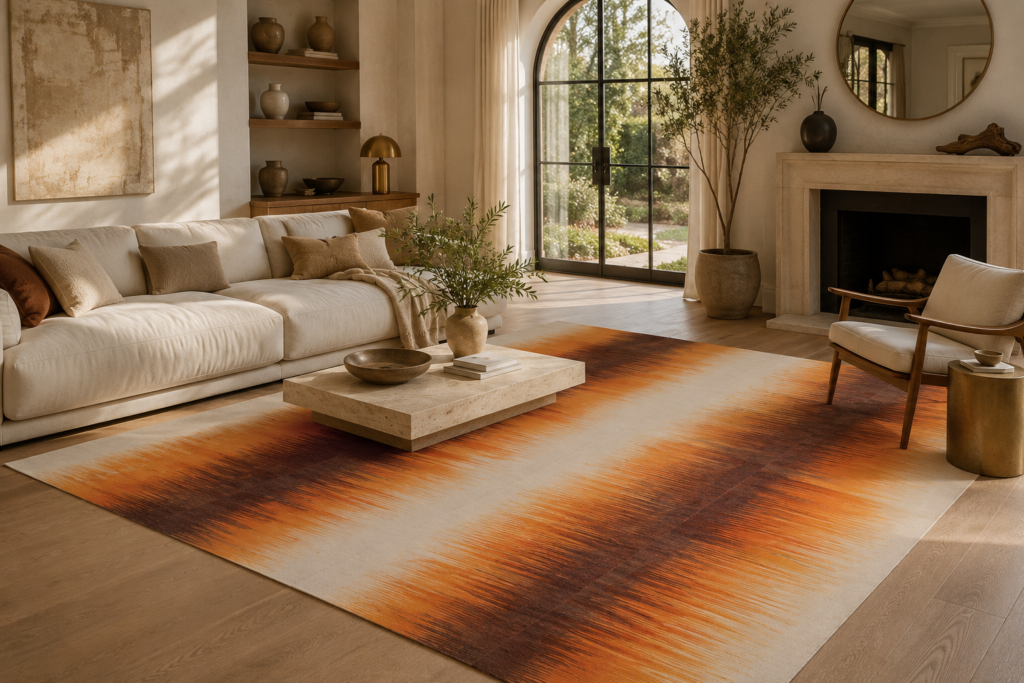
This guide walks you through practical, real‑life decorating ideas for 8×10 rugs in every major room of the house. You will learn how to position the rug, what furniture should sit on it, how to choose materials and colours, and how to avoid the common mistakes that make a room look smaller or cluttered. Use it as a full styling roadmap whenever you add or upgrade an 8×10 rug in your home.
Why 8×10 Rugs Are So Popular
An 8×10 rug covers about 80 square feet of floor, which is enough to organise a typical seating group or a full bed layout without swallowing the entire room. It is one of the most common standard rug sizes used by both homeowners and interior designers because it fits comfortably in most living rooms, bedrooms, and under many six‑seat dining tables.
Designers often describe 8×10 as the anchor size because it allows furniture pieces to overlap the rug while maintaining a border of exposed floor around the perimeter, which makes rooms feel bigger instead of crowded. Compared with smaller 5×8 rugs that can look like floating islands, an 8×10 size helps connect all the elements of the room into a single, harmonious composition.
Before You Start: Measuring And Planning
Understand Your Room Dimensions
The most successful rug layouts start with accurate room measurements. An 8×10 rug typically works best in rooms that are at least around 10×12 feet or larger, because this gives you enough space to maintain a border of 12–18 inches of visible flooring between the rug and the walls. This border acts as a visual frame, stopping the rug from looking like wall‑to‑wall carpet and helping the overall layout feel intentional.
If your room is significantly larger, such as 15×20 feet or more, an 8×10 rug can still work, but it may function better as a zone creator rather than full coverage for the entire space. In these cases, you may choose to define a single seating area or reading nook with the 8×10 and leave other parts of the room bare or styled with additional rugs.
Use Tape To Visualise The Rug
A widely recommended trick is to mark out the 8×10 footprint on the floor using painter’s tape or masking tape before buying. Taping out 96 by 120 inches lets you see exactly how much floor space the rug will take, how close it comes to walls or doorways, and how your existing furniture will sit around it. This quick step is especially useful in tight spaces or open‑plan areas where traffic lines and door swings matter.
Decide What Will Sit On The Rug
Before choosing a specific design, decide which furniture pieces you want to overlap with the rug. In living rooms, designers often aim for at least the front legs of sofas and chairs to sit on the rug to keep the seating group visually connected. In bedrooms, the standard goal is to allow the bed and nightstands to sit partly on the rug while still leaving soft rug area around the sides. Planning these relationships in advance ensures your 8×10 rug supports the layout instead of fighting it.
Living Room Decorating Ideas With 8×10 Rugs
Classic Front‑Legs‑On Layout
One of the most popular living room setups is the front‑legs‑on arrangement. In this layout, the front legs of your sofa and armchairs rest on the rug while the back legs sit on the bare floor, and a coffee table is fully on the rug. This approach is widely recommended because it visually ties the seating pieces together while making efficient use of the rug’s size.
This layout works especially well when your sofa measures between roughly 84 and 96 inches long, because the 8‑foot side of the rug aligns nicely with the width of the seating. The 10‑foot side then extends deep enough to accommodate your coffee table and the front portions of chairs or a chaise sectional, creating a unified conversation zone.
All‑Furniture‑On For A Luxurious Look
If your living room is slightly larger but not enormous, you can place all main seating furniture entirely on the 8×10 rug. In this option, the sofa, chairs, and side tables sit fully within the rug’s borders, leaving a framing strip of floor between the rug and the walls. This layout feels luxurious and hotel‑like, especially when paired with a plush rug material such as thick wool or a soft high‑pile weave.
Because this approach demands more overlap, it works best in rooms that can accommodate some spacing around the seating island. If your room is very large, you may eventually prefer a 9×12, but an 8×10 can still create a defined zone for a smaller group within the bigger space.
Floating Sofa Layout In Open‑Plan Rooms
Many modern homes use open‑plan layouts where the living area, dining area, and sometimes kitchen all share a continuous floor. In these spaces, an 8×10 rug can serve as a clear visual boundary for the living zone, especially when the sofa floats in the centre rather than against a wall.
Place the 8×10 rug so that the sofa and chairs sit completely on it, and allow the rug’s edges to define where the living space ends and circulation space begins. This helps prevent the room from feeling like a furniture scatter and instead creates a deliberately composed seating island within the larger open area.
Styling Tips For Living Room 8×10 Rugs
- Use the rug to introduce either pattern or calm, not both. If your furniture is simple, a patterned 8×10 rug can become the star of the room; if your furniture is bold, a solid or quietly textured rug will keep the space balanced.
- Match the rug shape to the room and furniture layout. Rectangular 8×10 rugs align best with rectangular living rooms and parallel sofa arrangements.
- Consider layering a flatwoven 8×10 rug under a smaller, softer rug to create depth, especially in large or lofty living rooms.
Bedroom Decorating Ideas With 8×10 Rugs
Under A Queen Bed
For bedrooms with a standard queen bed, an 8×10 rug is often considered the ideal size. The goal is for the rug to extend beyond the sides and foot of the bed so that you have a soft, warm surface where your feet land when you get in and out of bed.
A common formula is to slide the rug under the bed so that its top edge starts a few inches in front of the bedside tables. This allows around 18–24 inches of rug to extend beyond each side of the bed and a generous strip at the foot. The result feels balanced and luxurious, making the entire sleeping zone look grounded and complete.
Under A King Bed
While a 9×12 rug is often recommended for rooms with a king bed, many homes successfully use an 8×10 rug in this setting, especially when bedrooms are not overly large. In that case, the rug may not extend as far beyond the head of the bed but can still offer comfortable coverage around the sides and foot.
One strategy is to slide the rug further down, so it begins roughly one‑third of the way from the headboard. This places more rug at the foot of the bed, where you stand most often, while still providing enough width on each side for a pleasant step in the morning.
Small Bedrooms And Guest Rooms
If your bedroom is compact, an 8×10 rug can make the space look larger by unifying your bed, nightstands, and possibly a bench or small chair into one coherent grouping. For guest rooms, this size provides a hotel‑like sense of comfort without demanding a huge budget or renovation.
In very small rooms where an 8×10 feels too tight under the bed, you can slide the rug slightly down or use it to cover more of the open floor at the foot and side of the bed, leaving the area under the headboard uncovered.
Bedroom Styling Tips
- Choose softer materials like wool, cotton, or plush synthetics to make barefoot contact comfortable and inviting.
- Use the rug to introduce pattern if your bedding is simple; for patterned bedding, choose a calm rug that supports the colour palette without competing.
- Extend the feeling of luxury by matching the rug’s undertones with the flooring and wall colour, creating a layered, tonal look.
Dining Room Decorating Ideas With 8×10 Rugs
Rug Size Compared To Table Size
In dining rooms, the key rule is that chairs should remain on the rug even when pulled back for seating. An 8×10 rug generally fits well under many six‑seat rectangular dining tables, providing enough margin around all sides so that chair legs do not catch on the rug’s edge.
You can test this by measuring your table and adding around 24 inches to each side; if that measurement is close to 8×10, the rug size will likely work. For very large tables or eight‑seater layouts, you may need to size up, but 8×10 is ideal for many everyday dining rooms.
Choosing Materials For Dining Spaces
Dining rooms are spill‑prone, so flatwoven or low‑pile 8×10 rugs in easy‑clean materials are usually the best choice. Synthetic fibres and washable constructions are popular because they resist stains and are easier to maintain than thick, absorbent piles. Natural fibres like jute or sisal can also work under a dining table, especially if you prefer a textured, organic look and pair them with a stain protector.
Dining Room Styling Tips
- Align the rug with the table, not the room. The rug should follow the shape and orientation of the table to keep the layout coherent.
- Choose patterns that hide minor crumbs and stains, such as subtle geometrics, tonal patterns, or medium‑value colour mixes.
- If your dining space shares a floor with the living area, use an 8×10 rug in both zones with complementary colours to visually unify the open plan.
Home Office, Entryway, And Other Spaces
Home Office With An 8×10 Rug
In home offices, an 8×10 rug can reduce noise, create a more professional look on video calls, and make the space more comfortable during long work sessions. Place the rug under your desk and chair so that the chair rolls entirely on the rug without catching on edges; this protects both floors and chair wheels.
If your office is part of a larger open room, using an 8×10 rug also visually defines the work zone, separating it from leisure spaces and helping you mentally switch into work mode.
Large Entryways And Hall‑Like Spaces
For large entryways or broad corridors that open into living spaces, an 8×10 rug can act as a welcoming platform and an introduction to your home’s design scheme. Because these zones receive heavy foot traffic, durable materials and darker colours may be more practical, especially in climates with mud or snow.
Kids’ Rooms And Play Areas
In kids’ rooms or play areas, an 8×10 rug provides a soft, safe surface for playing, reading, and lounging. Look for stain‑resistant fibres and fun but not overly busy patterns that can hide toys between clean‑ups while still blending with the rest of your home’s décor.
Choosing Materials And Construction For 8×10 Rugs
Wool
Wool remains one of the most recommended materials for large rugs due to its natural resilience, softness, and stain resistance. A wool 8×10 rug can handle high traffic in living rooms and hallways while maintaining its appearance for many years when properly cared for.
Cotton
Cotton rugs are often lighter, more flexible, and sometimes machine‑washable, making them a good choice for casual spaces, nurseries, and seasonal updates. However, they may show wear more quickly in heavy‑use areas compared with dense wool or performance synthetics.
Synthetic Fibres
Rugs made from polypropylene, polyester, or nylon are popular for their affordability, colourfastness, and stain resistance. Many washable 8×10 rugs use synthetic fibres that can be cleaned at home, which is helpful for families with children and pets. These materials are especially practical in dining rooms, playrooms, and rentals.
Natural Fibres: Jute, Sisal, And Seagrass
Jute, sisal, and seagrass 8×10 rugs bring a natural, coastal, or boho look to the home, adding texture and warmth without heavy pattern. They work well as base layers for rug‑on‑rug styling or on their own in living rooms and dining areas, as long as you are comfortable with a firmer texture underfoot.
Pattern And Style Ideas For 8×10 Rugs
Minimalist And Neutral
In 2026, many homeowners are transitioning away from cold, flat greys and toward soft neutrals like ivory, camel, oat, and warm beige. A neutral 8×10 rug in these tones creates a calm, timeless foundation that works with both modern and classic furniture styles. It is especially effective if you want your art, cushions, and accessories to provide most of the colour.
Modern And Geometric
Bold geometric patterns in 8×10 rugs can energise a space and become the focal point in otherwise simple rooms. These designs work well in contemporary interiors, especially when the colour palette is limited to two or three shades that echo the rest of the décor.
Vintage And Traditional
Distressed, vintage‑style, and Persian‑inspired 8×10 rugs continue to be popular because they add depth and character without feeling overly formal. Their layered patterns are excellent at disguising everyday wear, and muted palettes can blend seamlessly with modern furniture.
Maximal And Colour‑Rich
For more dramatic interiors, saturated 8×10 rugs in deep blues, emerald greens, or rich reds can act as a visual anchor for the entire room. When everything else in the space remains relatively simple, a colourful rug becomes the star, setting the mood and drawing the eye immediately.
Colour Strategies That Make 8×10 Rugs Work
Build A Palette Around The Rug
Because an 8×10 rug covers such a large area, it is often easier to choose the rug first and build the rest of the palette around it. Pull one dominant colour and one or two accent colours from the rug pattern, and repeat them in cushions, throws, artwork, and accessories for a cohesive look.
Use Contrast Intelligently
High contrast between the rug and the floor can make the rug stand out, but too much contrast with every element in the room can feel busy. If your floors are dark, a medium or light rug will brighten the space; if your floors are pale, a slightly darker rug can ground the furniture. Ideally, maintain contrast with the floor but harmony with at least some larger furnishings.
Consider Mood And Function
Colour psychology suggests that blues and greens tend to feel calm and restorative, while reds and oranges are more stimulating and energetic. For living rooms and bedrooms where relaxation is key, softer blues, greens, and warm neutrals are often the safest choice. In dining rooms, home offices, or creative studios, bolder tones can encourage conversation, focus, or inspiration.
Layering 8×10 Rugs For Extra Depth
Layering rugs is a designer technique that has become increasingly popular because it adds texture, visual interest, and flexibility. A common method is to start with a neutral, flatwoven 8×10 rug that covers most of the floor area, then place a smaller, softer, or more patterned rug on top in the central portion of the room.
This approach works particularly well in living rooms and bedrooms where you want the comfort of a plush pile under your feet in the primary zone while keeping the investment lower by buying a smaller high‑end piece. It also allows you to switch out the top rug seasonally for a refreshed look while leaving the base rug in place.
Common 8×10 Rug Mistakes And How To Fix Them
Rug Too Small For The Layout
One of the biggest decorating errors is using a rug that is too small, causing furniture to sit half on and half off the rug or float around a tiny central mat. Choosing an 8×10 rug instead of a smaller size often instantly upgrades the room, making it feel more cohesive and more expensive.
No Overlap With Furniture
If your seating or bed does not overlap the rug at all, the rug may look disconnected, as though it was placed without consideration. At minimum, aim for the front legs of major pieces such as sofas, chairs, and beds to sit on the rug so that it feels like a deliberate foundation rather than an afterthought.
Ignoring Traffic Paths And Doors
Placing a rug where door swings catch on the edge or where people constantly step halfway on and off can become a tripping hazard and accelerate wear on specific spots. When planning your 8×10 layout, make sure doors can open freely and main walkways either stay fully on or fully off the rug as much as possible.
Overly Busy Combinations
Pairing a heavily patterned 8×10 rug with bold patterned wallpaper, strong printed upholstery, and many bright accessories can quickly feel chaotic. To fix this, let the rug be either the star or the supporting player: if the rug has intricate designs, tone down the rest of the room; if the rug is simple, feel free to be more adventurous elsewhere.
Care, Cleaning, And Longevity Tips
Regular Maintenance
Vacuum your 8×10 rug regularly to remove dust and grit before they sink deeply into the fibres. For most pile rugs, use a suction‑only setting or a beater bar on low to avoid damaging delicate fibres or fringe. Rotating the rug every few months helps distribute wear and fade more evenly.
Dealing With Spills And Stains
Blot spills immediately with a clean cloth, starting from the outside of the stain and working inward to avoid spreading. Avoid harsh scrubbing, which can distort the pile. Use cleaners recommended for the rug’s material, and for major spills or annual refreshes, consider professional cleaning—especially for wool and high‑value pieces.
Using Rug Pads
A good rug pad under your 8×10 rug increases comfort, keeps the rug from slipping, and reduces friction that can wear down both rug and floor. Pads can also improve sound absorption, particularly in apartments or multi‑storey homes where noise transfer is a concern.
Frequently Asked Styling Questions About 8×10 Rugs
Is An 8×10 Rug Big Enough For My Living Room?
For most standard living rooms, an 8×10 rug is large enough to anchor the main seating area with at least the front legs of sofas and chairs resting on it. In very large or open‑plan rooms, you may consider a 9×12, but 8×10 remains the most commonly recommended starting point.
Can I Use An 8×10 Rug In A Small Room?
Yes. In small rooms, using a larger rug like an 8×10 can actually make the room appear bigger by reducing visual fragmentation and creating one clear zone instead of many small patches. Just ensure that doors can open freely and that there is still some visible floor around the edges.
Which Material Should I Choose For A High‑Traffic Area?
For high‑traffic living spaces, designers often favour wool or durable synthetics because of their resilience and stain resistance. In dining rooms, low‑pile or washable synthetics are practical; in bedrooms, you might prioritise softness with wool or plush blends.
Do All My Rugs Need To Match?
Rugs do not have to match exactly, but coordinating them through shared colours, textures, or styles helps your home feel cohesive. For example, you might choose a neutral 8×10 rug in the living room and a patterned 8×10 in the bedroom that uses similar tones.
Final Thoughts: Designing Confidently With 8×10 Rugs
The 8×10 rug is popular for a reason: it is a powerful size that can instantly pull a room together, whether you are styling a cosy bedroom, a busy family living room, or a hardworking home office. By planning your layout carefully, selecting the right material and style for each space, and using the placement ideas in this guide, you can decorate with 8×10 rugs confidently and create rooms that feel balanced, inviting, and truly finished.
Use this guide as your go‑to reference each time you add an 8×10 rug to a new room, and you will quickly see how much impact the right rug can have on the entire look and feel of your home.