
An 8×10 rug is one of the most versatile and sought‑after rug sizes in modern homes, balancing generous coverage with flexible styling options. Measuring roughly 8 feet by 10 feet, or around 96 inches by 120 inches, this size works incredibly well in living rooms, bedrooms, and dining spaces without overwhelming the room. Whether you are refreshing a single space or planning a full home makeover, choosing the right 8×10 rug can completely transform the way your interiors feel, function, and flow.
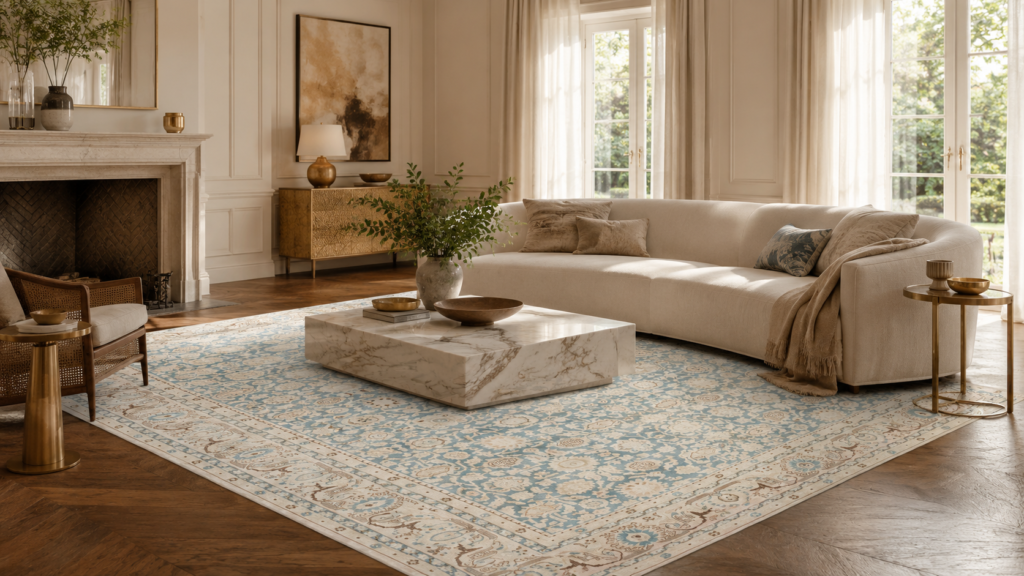
In this comprehensive guide, you’ll learn how to choose, style, and care for 8×10 rugs like a pro, with practical layout formulas, designer‑backed tips, and room‑by‑room examples that help you avoid costly mistakes and maximise the impact of every rug you bring into your home.
What Is An 8×10 Rug, Exactly?
An 8×10 rug is a rectangular area rug that measures approximately 8 feet in width and 10 feet in length, often expressed as 96 inches by 120 inches or about 244 centimetres by 305 centimetres. Many manufacturers list slight variations such as 7’10” x 10’2″, so it is always wise to double‑check the exact size on the product page before purchasing.
Within the rug industry, an 8×10 rug is usually classified as a medium‑to‑large size piece, suitable for standard living rooms, larger bedrooms, and dining rooms with a six‑seater table. Designers often treat this size as a “foundational” rug because it can anchor a full furniture grouping while still leaving a visually pleasing border of exposed flooring around the edges.
Why 8×10 Rugs Are The Sweet Spot
The 8×10 rug has become a go‑to size for both homeowners and interior designers because it hits the ideal balance between versatility and presence. It is large enough to unify sofas, chairs, tables, and beds into one cohesive zone, but compact enough to work in many mid‑sized rooms without feeling like wall‑to‑wall carpeting.
In most living rooms, an 8×10 rug works beautifully with the “front‑legs‑on” approach, where the front legs of sofas and chairs sit on the rug, keeping the seating visually connected and stable. In bedrooms, it typically extends beyond the sides and foot of a queen bed, creating a generous soft landing when you step out in the morning. In dining rooms, it often fits a table for six so that chairs remain on the rug even when pulled back, which improves comfort and proportion.
How Big Is An 8×10 Rug In Real Life?
If you are trying to visualise the actual footprint of an 8×10 rug, imagine the surface area of a small car or the space occupied by a queen‑size bed. That is roughly the coverage you are working with on the floor. In terms of room planning, an 8×10 rug typically performs best in spaces that measure at least around 10×12 feet, allowing for a border of 12–18 inches of exposed flooring around the perimeter for a balanced look.
One of the simplest yet most effective sizing tricks is to mark out the exact 8×10 dimensions on your floor using painter’s tape before buying. Walk around the taped area, place your existing furniture within it, and check how the layout feels from multiple angles; this five‑minute exercise can prevent costly returns and layout regrets.
8×10 Rug Layouts For Living Rooms
Ideal Room Size For An 8×10 Living Room Rug
Typical living room rug sizes include 8×10 and 9×12, with 8×10 often being the sweet spot for mid‑sized rooms. If your living room is approximately 12–14 feet wide and 14–16 feet long, an 8×10 rug generally provides enough coverage to anchor your main seating area while leaving a walkway and visible flooring around the edges.
Many design guides recommend leaving about 12–18 inches of exposed floor between the rug edge and the walls, which helps the room feel intentional rather than over‑carpeted. This border creates a frame that visually grounds your furniture while showcasing timber, tile, or stone flooring.
Front‑Legs‑On Layout
One of the most widely recommended living room formulas is the “front‑legs‑on” layout. In this setup:
- The front legs of your sofa sit on the rug.
- The front legs of armchairs or accent chairs also touch the rug.
- The coffee table is fully on the rug, centred within the seating group.
This arrangement ties the furniture pieces together so they feel like a single conversation zone and not separate items floating in the room. It is especially effective when your sofa is around 84–96 inches wide, as the 8‑foot dimension of the rug typically aligns well with this width.
All‑Furniture‑On Layout For Larger Rooms
In slightly larger living rooms, some designers prefer to place all furniture legs—sofas, armchairs, and side tables—fully on the 8×10 rug to create an even more unified island. This works when the room dimensions are generous and you can still maintain a reasonable border of exposed flooring around the rug.
If your space is much larger than 16×18 feet, a 9×12 rug may create a better scale, with the 8×10 functioning as more of a secondary or layered piece.
Small Living Rooms: Making The Room Feel Larger
In compact living rooms, an 8×10 rug can actually make the space feel bigger by visually stretching the floor plane and creating a single, cohesive zone. When your furniture overlaps the rug generously, the eye reads the layout as one unified composition rather than multiple small islands, which tricks the brain into perceiving more space.
8×10 Rugs In Bedrooms
Best 8×10 Layout For A Queen Bed
For a standard queen‑size bed, many rug size guides recommend an 8×10 rug placed horizontally under the bed, extending beyond both sides and the foot of the bed. This gives you a soft rug landing when you get in and out of bed, and it visually frames the sleeping area in relation to nightstands and dressers.
A common formula looks like this:
- Position the rug so that its top edge starts a few inches in front of your bedside tables.
- Ensure at least 18–24 inches of rug extend beyond each side of the bed.
- Allow a similar extension at the foot of the bed.
This configuration provides symmetry, comfort, and a designer‑level finish in most queen‑bed bedrooms.
8×10 Rugs Under A King Bed
While many designers recommend a 9×12 rug as the ideal partner for a king bed, an 8×10 can still work well in moderately sized bedrooms by focusing coverage at the lower two‑thirds of the bed. In this scenario, the rug usually starts further down from the head of the bed and still extends beyond the foot, giving you a comfortable area to stand while saving floor space near the headboard wall.
Guest Rooms And Multi‑Use Spaces
In guest rooms or multi‑purpose spaces where the bed might share the room with a desk or seating area, an 8×10 rug can help define zones without requiring multiple smaller rugs. Placing the rug under the bed and extending it toward the secondary zone softly unifies the room, especially in open‑plan or studio layouts.
8×10 Rugs In Dining Rooms
Ideal Table Size For An 8×10 Rug
In dining rooms, an 8×10 rug is commonly paired with a six‑seater dining table, allowing enough room for chairs to slide back while remaining fully on the rug. This not only looks polished but also prevents chair legs from catching on the rug edges as people sit down and stand up.
As a rule of thumb, designers suggest your rug be at least 24 inches larger than the table on all sides so chairs stay on the rug even when pulled out. For a standard six‑seater rectangular table, an 8×10 rug usually satisfies this guideline in most mid‑sized dining rooms.
Choosing Pile Height For Dining Spaces
In dining areas, low‑pile or flatwoven 8×10 rugs are generally preferred because they are easier to clean and offer smoother movement for chairs. High‑pile or shag rugs can trap crumbs and make chair legs wobble, so they are better reserved for bedrooms or cosy living spaces.
8×10 Rugs In Home Offices, Nurseries, And More
Home Offices
For home offices, an 8×10 rug often fits perfectly under a desk, chair, and small seating area, reducing noise and improving comfort underfoot. When placed thoughtfully, it can also help define the office zone in an open‑plan living area, visually separating work from relaxation.
Kids’ Rooms And Play Areas
In kids’ rooms and play zones, an 8×10 rug provides a soft, forgiving surface for play while shielding the underlying floor from toys and spills. Choosing stain‑resistant materials and patterns that can hide occasional clutter makes daily life easier without sacrificing style.
Choosing The Right 8×10 Rug Material
Wool
Wool is widely regarded as one of the best materials for high‑traffic 8×10 rugs because it is naturally durable, resilient, and stain‑resistant. It offers excellent softness underfoot while standing up to daily wear in living rooms, hallways, and family spaces.
Cotton
Cotton rugs tend to be lighter, more affordable, and easier to wash, making them ideal for casual spaces and relaxed interiors. Although they might not be as durable as wool in very high‑traffic areas, they are a good option for bedrooms, nurseries, or seasonal updates where you may change rugs more frequently.
Synthetic Fibres (Polypropylene, Polyester, Nylon)
Synthetic 8×10 rugs in materials like polypropylene or polyester are popular for their stain resistance, colourfastness, and value. Many washable rug brands use synthetic fibres to create rugs that can be machine‑washed, making them ideal for homes with kids, pets, or frequent spills.
Jute, Sisal, And Natural Fibres
Flatwoven jute and sisal 8×10 rugs are great for adding texture and an organic feel to coastal, boho, or rustic interiors. They are particularly effective as base layers that can be paired with a smaller patterned rug on top, creating depth and interest without overwhelming the space.
Styles And Patterns For 8×10 Rugs
Neutral And Minimalist
Neutral 8×10 rugs in beige, ivory, grey, or taupe are timeless and versatile, providing a calm foundation that works across multiple décor styles. They pair especially well with colourful furniture or artwork because they do not compete visually, allowing accent pieces to shine.
Bold Geometrics And Contemporary Designs
If your space feels flat, a bold geometric 8×10 rug with contrasting colours can instantly energise the room. These patterns help define zones in open‑concept layouts and can become the focal point of a living area without requiring new furniture.
Vintage, Persian, And Traditional
Vintage‑inspired and traditional 8×10 rugs with intricate patterns are perfect for adding character and depth, particularly in classic or eclectic interiors. Distressed finishes and muted palettes can soften the look, making them easier to integrate with modern furniture and architectural details.
Textured And Layered Looks
Layering a thin 8×10 jute rug under a smaller patterned rug is a popular designer technique for adding texture and visual richness. This approach lets you keep a neutral base while swapping the top rug seasonally, giving your room a fresh look without a complete overhaul.
Colour Strategies For 8×10 Rugs
Matching Or Contrasting With Furniture
A well‑chosen 8×10 rug can either harmonise with your existing furniture or create a striking contrast. If your sofa and chairs are neutral, you can introduce colour and pattern through the rug to avoid a flat, monotonous look. Conversely, if your furniture is already colourful or patterned, a subtle rug can ground the composition and prevent visual clutter.
Light vs Dark Rugs
Light‑coloured rugs make rooms feel larger and more open but can show stains more easily, which is important to consider in homes with children or pets. Darker rugs can hide dirt and create a cosy, intimate vibe, especially in large or open‑plan spaces that need more visual weight on the floor.
Colour Psychology And Mood
Colours can influence how a room feels: blues and greens tend to evoke calm, reds and oranges feel energetic, and neutrals foster a sense of balance and serenity. When choosing an 8×10 rug, think about how you want the room to feel—restful, vibrant, dramatic, or minimal—and let that guide your colour palette.
Measuring Correctly And Avoiding Common Mistakes
Always Measure The Room And Furniture First
Before you buy an 8×10 rug, measure your room and key furniture pieces, including sofa width, bed size, and table dimensions. This helps you understand how much of each item will sit on the rug and whether you will maintain appropriate walkways around the layout.
Use The Painter’s Tape Trick
As mentioned earlier, taping out the exact 8×10 footprint on the floor is one of the most reliable ways to test size before purchasing. It lets you see how the rug interacts with door swings, radiators, and built‑in elements, and ensures that your furniture looks proportionate within the marked area.
Don’t Choose A Rug That’s Too Small
One of the most common mistakes is choosing a rug that is too small for the room, leaving furniture half on and half off the rug or floating around a tiny island. In most cases, going slightly larger—such as choosing an 8×10 instead of a 5×8—will make the room feel more luxurious and better pulled together.
8×10 Rug Trends For 2026
Recent design trends highlight the 8×10 rug as a core tool for making rooms feel “finished” and more expansive, especially in open‑concept living spaces. Many homeowners are moving toward larger rugs that nearly fill the room, helping to improve spatial coherence and reduce visual clutter.
In terms of style, highly textured neutrals, subtle geometric patterns, and vintage‑washed designs remain in high demand, often used to create layered, lived‑in interiors that balance comfort and sophistication. Designers are also embracing washable 8×10 rugs and performance fibres as people look for beauty that can stand up to busy family life.
Caring For Your 8×10 Rug
Regular Maintenance
To keep your 8×10 rug looking its best, vacuum it regularly to remove dirt and grit that can wear down fibres over time. Rotate the rug every few months so that foot traffic and sunlight exposure are distributed more evenly, which helps prevent uneven fading or pile crush.
Spot Cleaning And Deep Cleaning
Deal with spills immediately by blotting—never rubbing—to avoid pushing stains deeper into the fibres. For wool and other natural fibres, use suitable rug shampoos or professional cleaning services as recommended by the manufacturer, while many synthetic and washable rugs can handle more frequent at‑home deep cleaning.
Rug Pads And Safety
A high‑quality rug pad under your 8×10 rug improves comfort, prevents slipping, and reduces wear by absorbing some of the impact from foot traffic. It can also help protect your flooring and improve sound insulation, especially in apartment settings or multi‑storey homes.
Frequently Asked Questions About 8×10 Rugs
Is An 8×10 Rug Big Enough For My Living Room?
For many standard living rooms, an 8×10 rug is considered an ideal size because it can anchor a sofa and chairs while leaving a nice border of exposed flooring. If your room is significantly larger, you might consider a 9×12, but for mid‑sized spaces, 8×10 is usually the sweet spot.
What Size Room Is Best For An 8×10 Rug?
An 8×10 rug often works best in rooms that are at least about 10×12 feet, giving you enough breathing room around the rug to maintain balance and circulation. In smaller rooms, it can still work, but you will likely have more overlap between the rug and the furniture, which can make the space feel intentionally grounded and cosy.
Can I Use An 8×10 Rug Under A King Bed?
Yes, you can use an 8×10 rug under a king bed, especially in bedrooms that are not large enough to comfortably fit a 9×12. You may position the rug slightly lower so that it extends more toward the foot of the bed and the sides, prioritising comfort where you actually step.
Which Material Is Best For An 8×10 Rug?
For high‑traffic living spaces, wool is often recommended due to its durability, natural stain resistance, and resilience. In families with children and pets, performance synthetic fibres or washable constructions may be more practical, while natural fibres like jute are ideal for adding texture in lower‑spill areas.
Should All My Furniture Sit On The 8×10 Rug?
Not necessarily—many designers advocate for the “front‑legs‑on” rule in living rooms, where only the front legs of seating sit on the rug. This approach creates visual cohesion without requiring an oversized rug, and it is one of the most popular formulas for 8×10 living room layouts.
Why An 8×10 Rug Should Be Your First Choice
If you are unsure where to start with rug sizing, an 8×10 rug is often the safest and most impactful first choice for most homes. It offers enough scale to anchor living rooms, bedrooms, and dining areas while remaining manageable to clean, style, and move between rooms if your layout evolves. By understanding how to pair this size with your room proportions, furniture layouts, materials, and style preferences, you can confidently invest in 8×10 rugs that will elevate your space for years to come.